Is the Drug War a Well Polished Lie?
A leading Mexican journalist with deep knowledge of the drug war, claims that government corruption and back alley deals with the DEA carry a heavy load of responsibility for facilitating and encouraging the war.
Topic
57 articles
A leading Mexican journalist with deep knowledge of the drug war, claims that government corruption and back alley deals with the DEA carry a heavy load of responsibility for facilitating and encouraging the war.
Carrying cash is not a crime. But that didn't stop the federal government from seizing $11,000 from Charles Clarke. Charles, a 24-year-old college student, was flying home after visiting family and friends in Cincinnati, when he lost his entire life savings to civil forfeiture.
An ongoing drug epidemic has swept the US, killing hundreds and sickening thousands more on a daily basis. The widespread use of a substance called "alcohol" — also known as "booze" — has been linked to erratic and even dangerous behavior, ranging from college students running naked down public streets to brutal attacks and robberies.
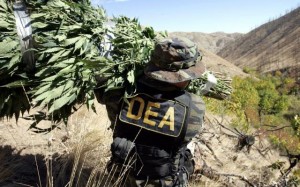
If the border patrol is just becoming the DEA with a new name, we have some serious problems on our hands. One such incident occurred in early May near the New York/Canadian border.
While the domestic War on Drugs has been supported for nearly four decades by Michele Leonhart, it appears as though some of her misguided policies, mostly those rooted in Reagan’s anti-reefer regime, may finally come crashing down with the recent appointment of the new leader of the DEA.
When news broke that Founders Fund, the proudly contrarian venture firm helmed by PayPal co-founder Peter Thiel, was going to invest a major $75 million in Privateer Holdings, a company focused on producing, distributing and educating consumers about legal marijuana, it opened the floodgates for other investors to barrel in.
Yarrow Kubrin was recently to be sentenced to four years in prison. His crime? He was growing medical cannabis in complete compliance with state laws.
What to do with the prisoners of a failed war? Since 2012, when voters in Colorado and Washington approved the tax and sale of recreational marijuana, the cognitive dissonance of America's drug penalties has become even more absurd.
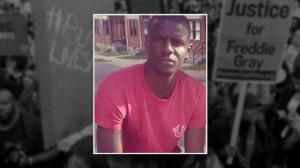
Freddie Gray's criminal background of several drug related offenses has been being tossed around quite a bit by people who bring it up as though it somehow justifies what happened to him.
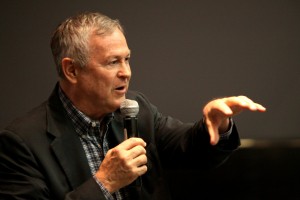
Congressman Dana Rohrabacher (R-CA) has introduced a new bill which appears to target the same aims of the so-called “Rohrabacher-Farr Amendment,” which many advocates claimed would end federal raids in medical marijuana states when it passed by bipartisan vote last year.
My advice: discretion until they are 18. A recent story out of Kansas illustrates perfectly why I feel this way. An 11 year old boy who's mother is a medical cannabis user took issue with some of the "factual" nonsense his school was saying about cannabis and spoke out in its defense, claiming that his mother used it.
Nebraskan law enforcement officer, Cory Cooper, discovered a small amount of cannabis during a traffic stop, and proceeded to use it to extort a teenager into performing sexual acts on him.
My experience, seeing the unfairness of the drug war laid bare before me, crystallized in my mind to form the nucleus of all my drug war efforts.
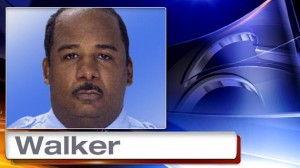
A disgraced ex-police officer testifying against his drug squad colleagues acknowledged Tuesday that he stole drug money, planted evidence and lied on police paperwork too many times to count. Jeffrey Walker told jurors that the Philadelphia Police Department drug squad targeted white "college-boy ... khaki-pants types" who were "easy to intimidate."
An exposé published last week by USA Today reveals that the practice of spying on American citizens had nothing to do with monitoring terrorist activity post 9/11, but that it was actually a program launched in the early nineties by the Drug Enforcement Administration as a means to further combat the drug war.
Many are screaming "hypocrisy," and with good reason. How can the U.S. government continue to classify cannabis as a Schedule I drug while simultaneously admitting, at last, to its medicinal benefits?
As a botanist myself, I always look for the proper names of things — especially plants. There is a reason for this, and any first year plant biology student will learn this.
The legalization of marijuana in Colorado hasn't solved the racial disparities in enforcement that drug-policy reformers had hoped to end, with blacks still far more likely than whites to be charged with pot-related crimes, a new report says.